A Hero’s Impact

Why didn’t I read this when I was younger? I had to go back through my old Amazon.com orders to remember when I purchased this book, and it turns out it was part of one of the last orders I ever made when I was still living in Richmond, Virginia. I ordered this book along with The Meaning of Matthew by Judy Shepard, the Enchanted DVD, and a Pokemon graphic novel — a pretty odd assortment, yet strangely appropriate.

hero perry moore


Of the sixteen books that survived my Gauntlet, this was actually one of the first I finished. (My hold for the audiobook version came in before some of the others, which was remarkably well done.) Also of the ones I’ve read from the list, this may be one of my favorites… and it is so bittersweet. I think I said bittersweet in one of my last reviews… it is so tragic.

Hero is about a teenage boy named Thom. His mother is presumed to be dead. His father is a smidge gruff  and stern, but still lovable.  They live in a world where Superheroes exist. !n fact, his father is a Super, but has become estranged from The League. Like many teenaged boys, Thom is trying to live up to his father’s expectations… but also hide some pretty big secrets: 1) he has superpowers and 2) he is gay. Throughout the book, Thom struggles with acceptance, fitting in, dating, discovering who he really is… which is all quite typical in my opinion. So what makes this book so appealing?

First, superheroes are awesome. The cast of characters in this novel are incredibly memorable. Thom has to go through an initiation of sorts at The League’s headquarters and is assigned to a team of similarly skilled budding new Supers, including Typhoid Larry (walking CDC nightmare), Scarlett (flying, fireball-throwing pizza delivery girl), and Ruth (chain-smoking, future-seeing old crone).  Oh, Thom’s power is being able to heal things. The team is sent out on little missions and things, and start to uncover conspiracies within The League… all really solid elements. Good good good.

Second, and I point this out second because it’s not the main part of the story, Thom’s sexuality, accepting himself for not only being a Super, but for also being gay, and discovering a bit of romance. There is a tenderness to Thom that makes him so likable. He is also self-deprecating in an endearing sort of way. (Because what teen isn’t a little self-deprecating?) There are so many wonderful passages in Hero… the prose is not only elegant, but also witty. I want to paste oh, so many of them here… but instead I’ll tell you to go read the book.

As for the tragedy: Perry Moore died of an accidental drug overdose in 2011. He was the executive producer of The Chronicles of Narnia film series (2005 – 2010). He was born and raised in Richmond, Virginia, he graduated from Norfolk Academy, interned at the Virginia Film Fest… And I knew none of this at the time I purchased the book. Moore was working on a sequel to Hero sometime before he died. Thankfully, I don’t think a sequel would be necessary, but it would at least satisfy everyone’s questions of “what next?” Hero was wrapped up pretty well. There were a few surprises that spurred on some tears, but I attribute that to the impact of the audiobook.

And so, Hero entered my life some four years ago in a rag-tag Amazon order, in the author’s hometown (that I will always fondly think of as another home,) and made the journey with me to forge a new life, where I “became more and more of who I really was, and less of this person I thought wanted to be.”

“Once in a while, life gives you a chance to measure your worth. Sometimes you’re called upon to make a split-second decision to do the right thing, defining which way your life will go. These are the decisions that make you who you are.”

Thanks, Perry Moore – your Hero made quite an impact on this reader.
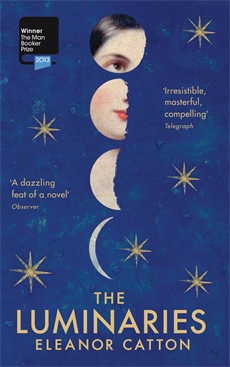
 

The Luminaries

“Never underestimate how extraordinarily difficult it is to understand a situation from another person’s point of view.”

A review by Miriam Huxley

Luminaries

I want to start out by saying that I really wanted to love this book.  But…I’ll preface that set of ellipses by saying that Catton’s novel is an achievement regardless of my overall conclusions.  Her dedication to her content and the quality of her research is immediately apparent.  There wasn’t a single moment when I felt anything was anachronistic to the time period or setting.  The integration of historical details was spot-on: never did it feel like information was being given simply for the sake of reminding the reader that this was a historical piece.

That being said, the novel was a tough read.  Granted, an 832-page novel is going to fluctuate in pace, but like the book itself, the prose started to feel both heavy and cumbersome.  By about page 700, the main mysteries had been solved and yet 132 pages remained.  I remember getting to that point and thinking “What next?”  Unfortunately, those 132 pages did a disservice to the (sometimes brilliant) prose in the first 700 pages.  I found myself reading right to the end simply because I wanted to say that I’d finished the book.  Within these pages, Catton goes into greater detail about the past experiences of the central characters, and though the content is interesting, it just didn’t contribute to the plot.  It was as if Catton felt the need to over-explain to a reader who couldn’t quite figure things out.  I’m not sure if the inclusion of these “summaries” was a decision made in an effort to follow the style Catton was attempting to replicate, or if Catton lacked confidence in her reader.  Either way, the over-explaining didn’t add anything critical.  The novel could have ended 700 pages in and I would have been satisfied.

Another major issue with The Luminaries is something I’d also like to briefly applaud.  Catton creates an absolutely massive cast of characters.  She includes a “Character Chart” at the very beginning of the novel which was helpful because it was often difficult to keep track of each character and what role they played.  Similarly, some of the male characters were indistinguishable in passages of dialogue.  That being said, Anna Wetherall, Emery Staines, Lydia Wells, Francis Carver, and Crosbie Wells were compelling characters.  Their stories formed the crux of the plot.  However, much of the novel was told from perspectives other than these aforementioned characters.  The novel begins with a long-winded section from Walter Moody—a compelling character himself who unfortunately doesn’t play much of a role later on in the book.  Other characters including Te Rau Tauwhare, Alistair Lauderback, Quee Long, and George Shephard have plotlines intertwined with the central characters, but their purpose gets slightly muddled as the novel progresses.  I think this novel would have been successful with a cast of characters half as long.

Other elements at work in The Luminaries are the zodiac signs and star charts throughout the novel.  Each character is assigned a sign and that sign is used to ascribe character traits.  The zodiac signs are also used to link characters and their plot lines.  But…it didn’t work for me.  I don’t have any particular knowledge of how zodiac signs or star charts work (and I don’t know that the average reader does either), but it didn’t add to the plot.  The star charts themselves were visually appealing, but I began to skip them as I progressed through the novel.

While The Luminaries begins as a murder mystery, it ultimately becomes a love story.  The last portion of the novel explains the love between Anna Wetherall and Emery Staines, both of whom are new in Hokitika and new to their respective trades (whoring and mining).  But I didn’t find their love story particularly compelling.  As the story unfolds, we learn that Anna has some kind of psychic connection to Staines (Lydia Wells says, “You may have an astral soul-mate, whose path through life perfectly mirrors your own” (716)), and is able to convincingly forge his signature despite the fact that she doesn’t know how to read or write.  I remain unconvinced.  The love story almost felt like an after thought, and, more importantly, it downplayed the importance of the murder mystery element (which was much more interesting).

Overall, I thought The Luminaries was commendable merely due to the amount of research that went into the development of the characters, the plot, and the setting.  I was completely immersed in 1865-6 New Zealand, fascinated as the frontier town grew throughout the course of the novel.  That being said, the prose became difficult to read, too much time was spent explaining things that didn’t need to be explained, and characters I connected to vanished before the conclusion of the novel.


Miriam Huxley

Miriam Huxley was born and raised in the wilds of British Columbia, but currently resides in Edinburgh, where she is completing a Master’s in Creative Writing.  She also has an expensive piece of paper that says she has a BA in English, History, and Honours in Creative Writing.  When she’s not writing witty prose, Miriam enjoys reading and critiquing books, experimental cooking, walking and running slowly, yoga, talking through movies, and listening to music of most genres (the good ones).

You can find Miriam at miriamhuxley.blogspot.co.uk and Instagram @miriamhuxley.


The Lovely Dog Bones

Sometimes my attitude towards the books I review end up sounding sarcastic, but I want to shed that for this entry. (Except for one little joke, but that’s for later.) Calling a novel poetic isn’t something I say often, but for The Dogs of Babel by Carolyn Parkhurst — I cannot think of a single better word.

dogs of babel carolyn parkhurst

I first picked up this title from Better World Books in a bargain bin sale. Quick side note: Better World Books acquires mostly from libraries, but also from bookstore partners and individuals. With every purchase from their site, they donate to help literacy funds around the world. It’s an awesome site, filled with awesome people, and awesome books, doing awesome things for the world. It’s awesome. Did I say that enough? Okay, let’s continue.

Admittedly, the cover caught my eye first, followed by the description, and for a few bucks, I figured I’d take a chance. That was years ago, and I can’t believe I waited this long to read it. It’s on the verge of being one of those books I would read again – shocking! – it’s the kind of book that stays with you. Haunting, but not in a bad way. Other people call this book The Lovely Dog Bones, since it came out around the same time as The Lovely Bones. I liked this one better than Alice Sebold’s book though… Sorry!

The narrative follows Paul, a linguistics professor, as he copes with the grief of losing his wife Lexy. After she is found at the base of an apple tree, it’s unclear to everyone whether she died by accident, or if she killed herself. The only witness to Lexy’s demise was their Rhodesian ridgeback Lorelei. After copious amounts of research about dogs and speech, Paul embarks (ha! I didn’t mean to do that) on a new project to teach Lorelei to talk, hoping to gain the closure he desperately wants from his wife’s untimely death.

Now, my hesitation to read this book was because I read a little blip somewhere that it contained a bit of animal cruelty. As someone who has had many dogs, I didn’t think I could stomach that; however, I was able to get through it. I thought for sure, it would be Paul beating his dog Lorelei out of frustration since, hello, dogs can’t talk — but I was wrong. Paul has nothing but love for Lorelei, the last remaining piece of his late wife’s existence. For those concerned, the abuse comes in the form of a whack-job scientist Paul discovers through his research. This guy performed experiments on his animals to alter their throats to try to give them what nature hadn’t: the power of speech. The news articles and testimonies from this case fuels Paul’s study into canine linguistics. There is a messed up, creepy culmination of all of this, but I don’t want to spoil it. All I’ll say, is that it makes sense in the narrative. It’s a little gruesome, but not unbearable. (Then again, I read a lot of Stephen King.)

In chapters alternating from the present are vignettes of Paul and Lexy’s life together, which illustrate not only their relationship, but also Lexy’s complex personality. That’s something I don’t want to spoil either. Honestly, I usually don’t mind spilling the beans, but since this is a book I plan on recommending to several people, I’m restraining myself. Lexy is one of those characters that I find so incredibly interesting, and from Parkhurst’s story-telling, I yearn to know more – like Paul in many ways.  The reason I call this book poetic is based largely on Lexy. She is creative, enigmatic, talented, but also sad and damaged. There’s a lot of feelings that spawn while reading about her. Some may think she’s a pretentious artist, and though that’s part of it, Lexy’s pairing with her polar opposite, Paul, makes them such a wonderful couple, making it that much harder to accept their fates. Though I’ve put a lot of focus on Lexy, I wouldn’t call this a character study. I wouldn’t say her character is more important than the plot, I’ve just put a larger emphasis on her here.

Something I greatly appreciated about this novel is the acceptance that life and relationships are not perfect, and that’s what love is. Love is so often portrayed as sunny and flawless and romantic, but there are the darker parts of the lives you share with your significant others that make up what love is, too. One of the final passages from the book reads: “I remember, always  I remember, that she brought solace to my life as well as grief. That for every dark moment we shared between us, there was a moment of such brightness I almost count not bear to look at it head-on.” — And that’s okay. How many of us reflect on our loves from the past, and in our sentimental-soaked memories, glorify everything? The darkness of love is ignored and Parkhurst forces us to recognize our denial. That’s reality. That makes an impact.

Oh, the joke I was going to make: I couldn’t help but think of Bush’s Baked Beans, and the dog that always wants to give away the family recipe but his owner keeps silencing him. Especially since the dog on the cover looks just like the dog from the commercial. “Roll that beautiful bean footage!” Okay, so it’s not really a joke… just a funny reversal of roles. But you know what I’m talking about.

Now go read that book.

Be My Guest

Hello Readers!

A recent proposition has come to my attention, and since it has been something knocking around in my brain for a while, I’ve decided it’s a sign to take further action.

This is an open invitation to anyone interested in being a guest author for BookSick.

This can be a one-time post, or possibly more. You can be a current blogger, or someone who would just like to talk a bit about a particular book-related topic. At this early stage, I’d say I’m pretty flexible.


For any and all those interested, please contact me here or at booksickblog@gmail.com

I look forward to hearing from you! ❤

Go back

Your message has been sent

Warning
Warning
Warning
Warning

Warning.

Why, My Little Party’s Just Beginning

Ah, here we are! Finally I can dish out a bit of chatter on Dorothy Must Die. Danielle Paige has not let me down with her interpretation of Post-Dorothy Oz. As I mentioned in my prior post that I hold this franchise in high regard… tangled up in that regard is my nostalgia, and therefore a clear bias, along with the utmost of love for this piece.

Imagine trusting someone so much, you just know that anything they do or say is golden in your eyes. Coming from one as apprehensive about making new friends as me, earning that level of trust takes time… slowly inching the door open. But once that door is open, it stays that way! It’s a lot easier to overlook flaws or short-comings.

Uh oh, now it sounds like I’m going to rip into things! Not so — I just want you, Kind Reader, to understand my clear stance on Oz-ian things.

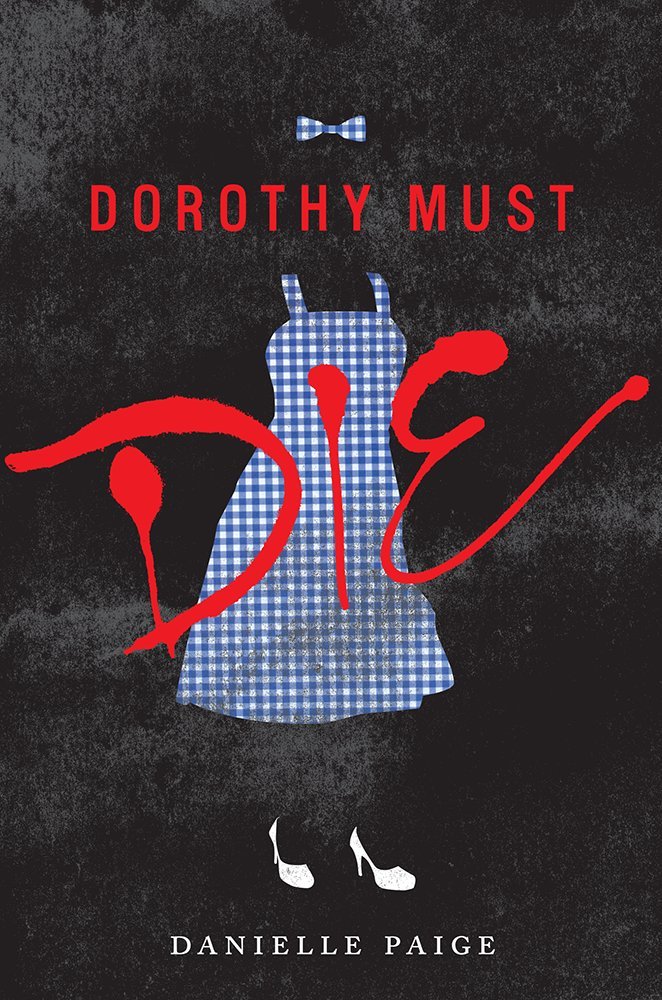
Dorothy Must Die

After finishing No Place Like Oz, I immediately picked up my (signed!) copy of DMD and sped through the first few chapters. Just like NPLO, Paige pays homage to the original books. I know she did a lot of reading and research into them, too, sending a fan like me squee-ing when I encountered old characters like Jellia Jamb, The Patchwork Girl and Frogman later in the book. Paige, however, is really out for blood. Her protagonist Amy Gumm (taken from Judy Garland’s true name!) is continually forced into some form of solitude… and I’ll tell you why I like that:

In so many books, characters are transported to another land/world/time and thus begins the questions and quests that plague every RPG video game… Where am I? How did I get here? What’s my name again? I know this literary device helps the reader/player insert themselves into the novel for a closer connection with the story, but many times I find these characters turn out to be husks, lacking depth. Not so with our Amy. She has a clear outward persona at the beginning of the story, but through many events, she is separated from things… her home, her mother, even her new friend after landing in Oz (OMG, I was shocked!). Again and again, Amy is forced into being alone, which forces her to think and ponder and muse. These inner monologues, for me, greatly strengthened her characterization. Far from a husk, Amy is a smoldering ember.

Realizing this is the first of a trilogy (right?), there’s much to be said for a writer of young adult literature to pen a character with, from what I can tell, a clear path for her development and growth over the course of the story. I never found myself rolling my eyes like I have with other YA protags. Amy, like a rock in the tumbling waves, is slowly being shaped by her environment. Loss after loss after mishap after near misses… she keeps getting beaten down.

What will be interesting in the future installments is how her further development is treated. It is clear that she is being built up to be a desensitized assassin, but with no clear-cut motives from her surrounding cast members, I can guarantee she’ll be faced with a decision that will question her moral integrity. Where’s the line between Good and Wicked? Perhaps she’ll discover it’s all a matter of perspective. (And therefore, fits snugly into the YA genre. Yay for morality & ethics building!)

~ ~ ~

Awrighty, Danielle — You’ve got me believing Dorothy is an evil bitch. And in those final scenes, you also got me asking: Does Dorothy HAVE to die?? Ugh, look what you’ve done!

Let’s see what else ya got comin’ our way! ;D

Mid-year Appraisal

Six months ago I posted an entry detailing my method of selecting the order of what books to read next for this year. Now that it’s June, I thought I would do a quick tally of what I’ve read so far of that list, and what’s in progress. Again, strikethroughs represent finished entries, bold represents currently in progress, and asterisks* represent e-books.

  1. Reached
  2. Insurgent
  3. Cujo
  4. Dogs of Babel
  5. Hero
  6. Ten*
  7. The Brothers Bishop
  8. A Year in Provence
  9. Rebel Heart
  10. Beautiful Darkness
  11. Will Grayson, Will Grayson
  12. In The Line of Beauty
  13. Misery
  14. Better Nate Than Ever*
  15. PTown
  16. Little Children

I’ve tried to keep things in order, but after reading Cujo, reading another book about a dog turned me off a bit. I got about 30 pages into Dogs of Babel and had to switch over to Danielle Paige’s No Place Like Oz and Dorothy Must Die. (Those will have their own blog post!) Now I split my time between Ten, since I can now read in bed at night, thanks to my Kindle Paperwhite, and Dogs of Babel. Admittedly, looking back along this list, I believe all of the books I’ve finished were in audio format… which could explain why it’s taking me so long to get through Dogs of Babel. Try as I might to get a hold of the audiobook copy, the only one in my library system I could find was at a school for the blind, and my librarian said they couldn’t request it. (Why not?? Ugh…) There is a rhythm to Dogs of Babel’s chapter structure that I am finally getting in to, and I am really surprised by how much I appreciate Parkhurst’s writing style. Her dialog between characters seems so natural and ‘real-worldy’ that I am easily able to imagine illustrious scenes as I work my way through the narrative. That’s the whole point of story-telling anyway, right?

On the other hand, Ten is not as exciting as I hoped it would be… I had high hopes, but I suppose there really is little sense in recreating Agatha Christie’s And Then There Were None. Why bother sticking modern day teens on an island and have a power outage? There hasn’t been a desperate attachment to technology that has been built upon to make the power outage worth sending the cast into a frenzy over. I’m about a third of my way into it and nothing is blowing me away… But I’ll save the rest of my judgement until I finish. Every time I sit down to read it, I’m compelled to go ‘home’ on my Kindle to try and read something else, like The Madman’s Daughter or Better Nate Than Ever, but so far, my willpower has been steadfast. Not all hope is lost… yet!


Besides this list, I’ve made my way through many other books, all listed on the Unmentioned page, which has just been updated. With all of the new ARCs from BEA this year, I’ll have to take another stab at that separate page… I may just combine them all together  and use a different symbol to differentiate them, similar to the e-books. Oh, I can’t wait to read those!


As always, stay tuned! Thanks for reading!

BEA – Books Everywhere…Ahhh!

Where do I even begin?

The last few days have been incredible — and I know my tendency to blather on about things I find exciting, but I’ll try to keep my gushing to a minimum.

This year, I had the wondrous opportunity to attend BEA – Book Expo America – which, I’m convinced, is where all my dreams come from. My favorite wordsmith, Jane Yolen, along with her daughter, Heidi Stemple, ushered me to the convention as Morpheus and Hypnos would upon a dark steed (or in this case, their black Hyundai), through the perilous nightmares of New York City streets.

36 books, 21.5 miles, 3 car jump starts and 1 sippy cup later (and only one caffeinated beverage!), I’m back home, still reeling from how much was packed into the last three days.

My biggest take-aways from my first BEA:

The hype is real and it’s a lot of fun!  Now, here’s what I’m going to tell you… because somehow I missed this in all my preparations… What I failed to gather was an understanding as to just how much time I would spend standing in line.

My first stop was waiting in line for Neil Patrick Harris. Letdown #1: a billion other people thinking the exact same thing. Letdown #2: He might not get to sign for everyone. Letdown #3: Rather than a full galley copy, he was signing a sample.  Whoa, whoa… a sample? What is this?? I stood in line for 45 minutes for someone to hand me a 30 page pamphlet? Why would I want this signed? That’s when reality set in. I ditched the line.

Til I got sucked in again when I saw Anjelica Huston. (At least this time, it was a hardcover copy of the full book!) And again for Marie Lu. And Rainbow Rowell. And Lev Grossman. And Tim Federle. And Ally Condie… Though there were so many I missed! Garth Nix, Holly Black, Cassandra Clare, David Levithan, R.L. Stein, Stan Lee, A.S. King, Alan Cumming, Jane Lynch, Gregory Maguire… and Grumpy Cat 😦

Luck was not on my side when it came to any author in the autographing area. Each attempt was thwarted by a early closed line, or a mile-long line of squatters. Squatters. You know, the folks that decide to sit down because they’ve been waiting in line since the night before the universe was created. That kind of patience extended ell beyond my threshold for this event. Whether I arrived an hour before a signing, or ten minutes before a signing, I never stood a chance. That’s another thing: expect your plans to be changed. All of the authors mentioned above were those I intended on meeting, but then again, I suppose meeting 1/3 of my list isn’t too bad.

Instead, I found my biggest rewards at book drops. That’s where a publisher births about 100 ARCs on a tabletop while people rush by and swoop them up. These lines, though also rather long, rush through rather quickly, usually yielding a satisfying three or four ARCs at a time.

What I missed out on the most were the author panels (many took place on Saturday, the day after I left when BEA became open to the public) but also on the conferences and talks. I inadvertently bypassed so many networking opportunities with other bloggers. Though, I should point out, the few that I met while waiting in lines were all lovely! Here’s to hoping I’ll get to attend next year!

In the meantime, I submit this list of acquisitions to my Sickness. These were not purchased! So based on my original rule set, they’re acceptable additions. With all of these new ARCs, I will need to revisit and reformat how to account for them… But until then…:


  1. Trial By Fire – Josephine Angelini
  2. Miles to Go – Connie Bailey
  3. Jane and the Twelve Days of Christmas – Stephanie Barron
  4. Witch Island – David Bernstein
  5. The Iron Trail – Holly Black & Cassandra Clare
  6. Atlantia (sample) – Ally Condie
  7. The Emissary – Patricia Cori
  8. So We Read On – Maureen Corrigan
  9. Not My Father’s Son – Alan Cumming
  10. Hell to Pay – Garry Disher
  11. Endgame: The Calling – James Grey & Nils Johnson-Shelton
  12. The Magician’s Land – Lev Grossman
  13. Neil Patrick Harris: Choose Your Own Autobiography (sample) – Neil Patrick Harris
  14. Skink– No Surrender – Carl Hiaasen
  15. Bombay Blues – Tanuja Desai Hidier
  16. The Devil’s Intern – Donna Hosie
  17. Flying Shoes – Lisa Howorth
  18. A Story Lately Told – Angelica Huston
  19. Mastering Toby – Jan Irving
  20. Evil Librarian – Michelle Knudsen
  21. Amulet: Escape from Lucien – Kazu Kibuishi
  22. The Young Elites (sample) – Marie Lu
  23. On A Clear Day – Walter Dean Myers
  24. Last Winter We Parted – Fuminori Nakamuri
  25. Young Houdini: The Magician’s Fire – Simon Nicholson
  26. Clariel – Garth Nix
  27. King Dork Approximately – Frank Portman
  28. Mort(e) – Robert Repino
  29. Jackaby – William Ritter
  30. Landline – Rainbow Rowell
  31. Dataclysm – Christian Rudder
  32. I Became Shadow – Joe Shine
  33. Sway – Kat Spears
  34. A Sudden Light – Garth Stein
  35. Sisters – Raina Telgemeier
  36. The Black Butterfly – Shirley Reva Vernick

Where You Belong

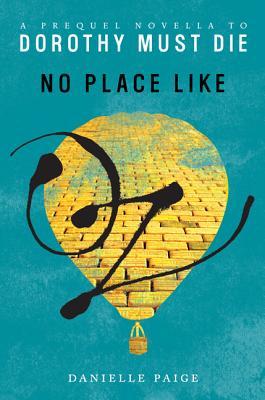
Veering slightly off the track of my trajectory of books for the year, I couldn’t help but read No Place Like Oz, the prequel e-novella by Danielle Paige, as soon as I caught wind of it. I was fortunate enough to have the pleasure of meeting her and listening to her talk about her (now New York Bestselling) book Dorothy Must Die at my local bookstore, The Odyssey.

This year marks the 75th anniversary of one of my favorite franchises of all time. I mean favorite. I’m talking: I had a Wizard of Oz birthday cake, y’all. FAV. Over the years, Baum’s books have been adapted countless times, and I would say that this newest addition to the world does not disappoint. Thankfully, I can launch myself directly in to Dorothy Must Die without having to wait. Though I haven’t finished many  of the original Baum books, I have completed the more popular of the stories, which is where Paige’s books draw their inspiration.

“Home isn’t where you’re born — it’s where you belong” 

No  Place Like Oz


This prequel brings us back into Dorothy’s life a few months following her return to Kansas. Though she’s been happy to get home after all of her adventures, she has gotten a bit stir-crazy knowing that there’s a whole world out there beyond dusty old farmlands. On her sixteenth birthday she receives a mysterious package containing fancy red heels that end up transporting not just her, but also Uncle Henry and Aunt Em to Oz. Once there, she resolves to never return to Kansas, despite her family’s protests, and to reunite with her old friends. Instead, she ends up spending much of her time at the Emerald City and becomes the acquaintance of the new ruler, Ozma…. And I won’t spoil anything else — but it’s good!

Reading through Paige’s text feels so familiar. Whether it’s the subject of Oz or perhaps her style of writing, I breezed through this novella in just a few hours. One thing I always appreciated about Baum’s original Oz stories is his ability to describe characters and scenarios in such a way that is brief, yet provides just enough detail  to allow your mind to spin these marvelous images. I find Paige achieves this in very much a similar way. Her prose is contemporary, yet not too “current-dated,” by which I mean, it does not fall into today’s vernacular common place in other young adult works. That said, it does still feel very Y.A.. (I’ll have to re-read some of Baum’s books to get a sense of how they match up.)

In this little novella, we see quite a development in the character of Dorothy, from a very familiar “oh-fiddle-dee-dee” corn-fed girl to… well… I won’t ruin it… But trust me on this: it’s worth the read. This, so far, seems like the perfect primer for the full-length Dorothy Must Die, and at a very reasonable $1.99 from Amazon’s Kindle Store, it’s worth the buy. You can bet I’ll be writing about Dorothy Must Die when I finish that, too.

~ ~ ~

Special shout out — Hey Ma, if I wasn’t clear in the rest of this entry…

GO READ THIS! 

They Will Not Go Unnoticed

After updating my master list this month, and feeling a bit discouraged with my progress, I decided to create a separate page for The Unmentioned titles that I finish in between the books I own. I don’t want anyone (especially me!) to think that I’m slacking off over here. There is almost always an audiobook on my smartphone and discs in my car’s CD player. Seeing the list also makes me feel pretty darn accomplished. This new list is also a way of reminding myself that I can blog about books outside of my own shelves… Because I’ve come across some nice gems WITHOUT having to purchase them! WIN!

The Unmentioned

Always Trying to do the Right Thing


Book number three from my bracket is Cujo by Stephen King, in which a rabid dog kills four people and terrorizes a mother and young son trapped in a broken-down car.

cujo

Growing up, Cujo was one of those books (and movie) by Stephen King that was considered too graphic for my young disposition. This was, of course, before my grandfather decided to sit my little sister and I down to watch Pet Semetary one day. All I remember about Cujo is that it was about a big scary dog, and I shouldn’t watch it because we had dogs and there was no need to be afraid of them. Now that I’ve finished the book, I could maybe see how this would have left a lasting impression on me when I was young.

As with most of King’s work, I fall right into his rhythm of storytelling. I so appreciate his attention to flesh out small details that other authors would simply pass over to plow ahead with the action. This depth and nuance is what brings me back to King over and over again.

While writing Cujo, from what I understand, King was in a bad spot. Drinking heavily throughout most of the process, King allegedly does not remember writing much of the story, which then left him wide open for negative criticisms. Some have said this was one of King’s laziest works, others say it was just filler. I disagree, and rather suggest Cujo be looked at again for further consideration.

On the surface, it’s a sad story about a boy’s dog that is infected with rabies and goes on a bit of a killing spree, with an unlucky mother and son being caught in the middle. I suppose there’s something to be said about the mother’s infidelity, but I find her dedication to her son redeeming in many ways. What I find curious (SPOILER) is that the son dies slowly from dehydration, yet the mother survives. Ultimately, she and her husband reconcile their differences and the loss of their son somehow stitches their marriage back together, rather than tearing it apart… but what does that have to say about King’s thought’s about her character? Is this her punishment?  I was totally surprised that the son died in the end, alone, in the car that he was stuck in for over two days. Poor little guy…

Right at the end, King enters a post script about Cujo:

“It would perhaps not be amiss to point out that he had always tried to be a good dog. He had tried to do all the things his MAN and his WOMAN, and most of all his BOY, had asked or expected of him. He would have died for them, if that had been required. He had never wanted to kill anybody. He had been struck by something, possibly destiny, or fate, or only a degenerative nerve disease called rabies. Free will was not a factor.”

If free will is not a factor in the things we do… how can we ever be held accountable for our actions? Are we all propelled through our lives without any choice in the matter? (Do all roads lead to The Tower? Do we all serve The Beam?) Perhaps trying to always do the right thing is all we can do to convince ourselves that we are autonomous. Or maybe it’s just an excuse.